



Fast Shipping
Most orders shipped within 24 hours

Made in the USA
All tools and books made in USA

Information You Can Trust
Authors & editors with decades of experience


Shop Collections


Customer Testimonials

'Impressed with your work'
I always enjoy your writing voice, am impressed with your work and I'd like to learn some of your skills.
– Jeff S.
'The cat's pajamas'
You're the bee's knees. The cat's pajamas. Wonderfully inspiring and informative. I hope to one day take a class from you. For now I'll just have to keep reading!
– Alec
'Appreciate your writing'
I appreciate your writing and work within the community.
– Damein
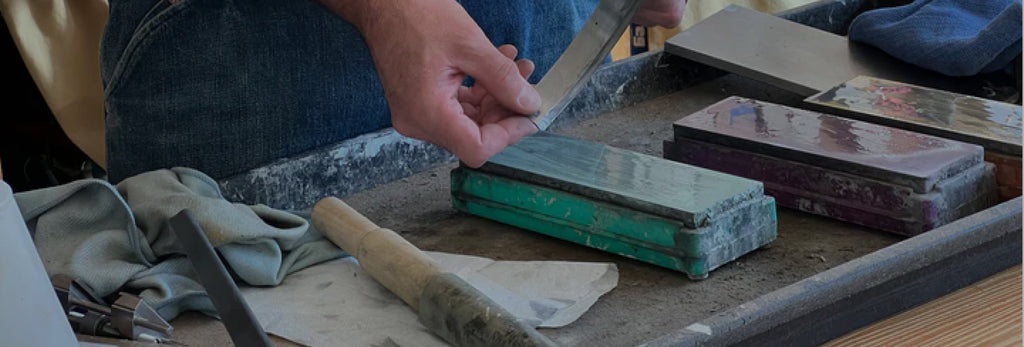

LAP Open Wire, June 20, 2026
Comments are now closed. Please join us again on August 8 – same place, same time. Welcome to Lost Art Press Open Wire, where until 5 p.m. Eastern, you can ask any and all woodworking ...

For Sale: Nice Machines from Kelly Mehler’s Workshop
When woodworker and instructor Kelly Mehler died unexpectedly last year, he left behind a shop full of meticulously maintained woodworking machines that he used in his personal ...

New Book: ‘17th-Century Essex County Cupboard’
Peter Follansbee’s “17th-Century Essex County Cupboard” is about as close a description as we’ll ever get to how complex pieces of 17th-century furniture began in the forest and ...

LAP Open Wire on Saturday (June 20)
We’re cooking up answers for Open Wire this Saturday (June 20) on the Lost Art Press blog – so if you have a woodworking question, you’ll have until 5 p.m. Eastern to ask it in the comments ...

Video: D.R. Dimes Reborn
D.R. Dimes was one of those famous furniture making companies that was so ubiquitous that you couldn’t imagine it ever going out of business. But it did. What I didn’t know is that it has recently been ...


Cricket Tables
by Derek Jones
You can download an excerpt from this book here.
Simplicity, necessity and ingenuity are the three key principles for making cricket tables. This traditional three-legged table exists in a variety of forms and woods – no two are the same. So making them follows an organic process – your tools and materials dictate your approach and your cricket table’s final form.
Jones introduces the form, then teaches you the simple skills to create a variety of everyday furniture with a few basic hand tools and easily sourced materials.
Technical Specifications
“Cricket Tables” is 112 pages, full color and printed on white, 70# matte coated 8-1/2" x 11" paper. The pages are sewn, glued and taped for durability. And the whole thing is wrapped with 98-point boards that are covered in lime cotton cloth. Like all Lost Art Press books, it is produced and printed in the United States.
Contents
Introduction 1
1. Misnommer & Nomenclature 5
2. Simple Forms & Variations 11
3. Huguenots & Other Influences 29
4. Building with Triangles 37
5. Human Resources 43
6. Geometry for 3 Legs 57
7. Jigs for Joinery 63
8. Projects 69
Afterword 99
Acknowledgments 101
About the Author

Derek Jones began working with antique furniture at 14 as a Saturday boy in a restoration workshop in Brighton. What followed was a couple of decades of design and commercial manufacture within the industry for retail customers and end users. Nearly 40 years later, the skills acquired in that little workshop have become an important part of his working methodology today – good construction and a careful choice of materials with a nod to the past.
As editor of the UK’s premier woodworking magazine, Furniture & Cabinetmaking (2008- 2018), Derek managed to combine his flare for making with a passion for sharing a range of skills that if not practiced might one day no longer be part of our lives. Time spent making things by hand today is perhaps the most important investment we can make for our future. Make things well and build them to last using materials and techniques that complement our natural resources.
Read more about Derek in a profile by Nancy Hiller.